
Call Us (903) 204-7571 Today

“Taught By Fathers, Trusted By Families”

July 10, 2026

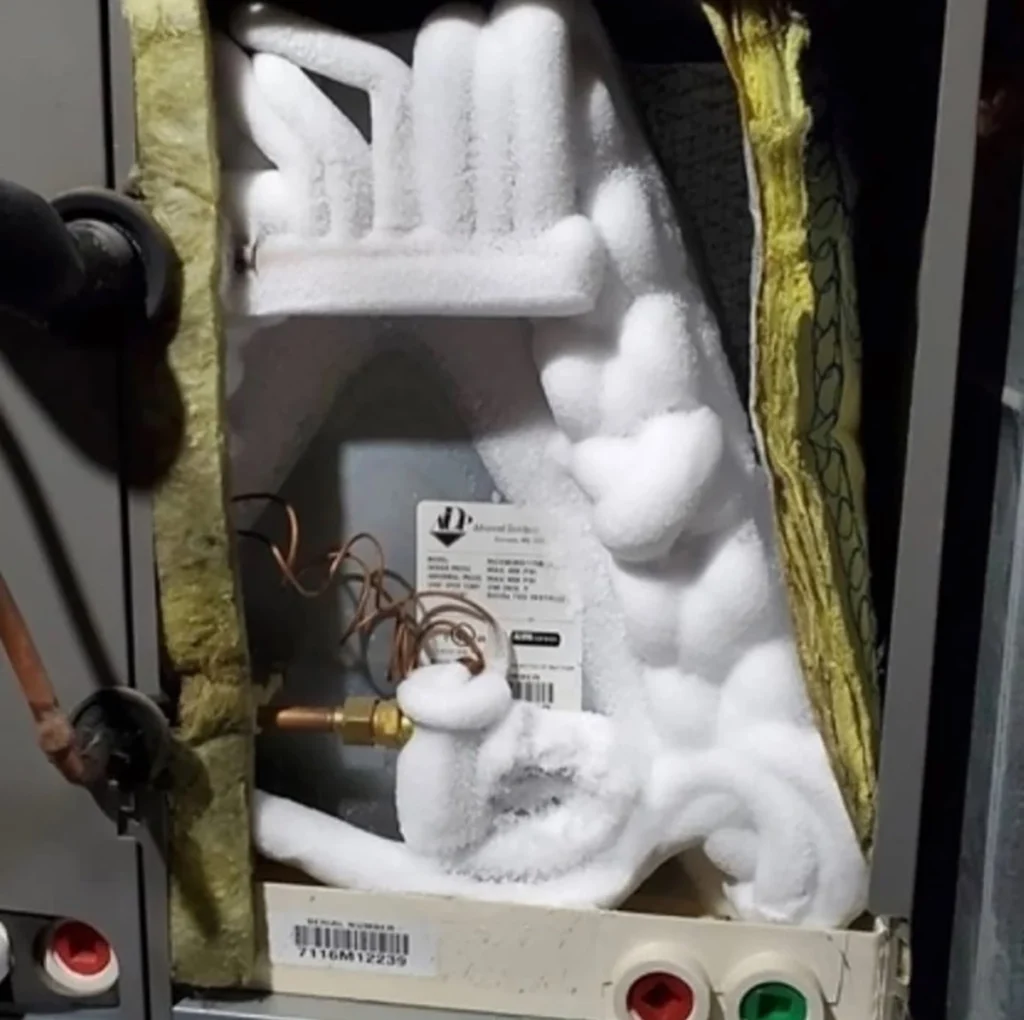
Close-up of ice buildup on indoor HVAC components and refrigerant lines inside an air handler or evaporator coil compartment. Best for blogs about frozen AC coils, evaporator coil freezing, AC not cooling, airflow problems, refrigerant issues, frozen HVAC unit troubleshooting.
Air Conditioning, Maintenance, Repair

Air Conditioner Evaporator Freezing: Causes & Solutions

When your air conditioner evaporator freezing happens, many homeowners assume the outdoor unit is the culprit. In reality, the ice is forming inside your home on the evaporator coil, often hidden from view. That frozen coil doesn’t mean your system is working overtime to cool your space. Instead, it signals that something is preventing normal heat absorption, which causes moisture to freeze right where it should be evaporating. We’ve responded to countless calls where families thought a frozen coil would fix itself once the weather changed, only to discover deeper issues with airflow or refrigerant levels. Understanding why this freezing occurs — and recognizing the early warning signs — can help you act quickly before minor problems turn into costly damage or a complete system breakdown during the hottest months. What Causes an Air Conditioner Evaporator to Freeze? When your air conditioner’s evaporator coil becomes encased in ice, it’s not a random occurrence. It’s a symptom of disrupted refrigeration balance. At C&R HVAC, we help Tyler homeowners understand that a frozen evaporator almost always traces back to one of three core problems: restricted airflow, low refrigerant levels, or mechanical failures that prevent proper heat exchange. Restricted airflow is the most common culprit we diagnose. When your system can’t pull enough warm air across the evaporator coil—often due to clogged filters, closed supply vents, or blower motor issues—the coil temperature drops below freezing. Low refrigerant caused by leaks creates a similar effect, causing the remaining refrigerant to absorb too much heat and plummet in temperature. Mechanical problems like expansion valve or faulty thermostat can also trigger freezing by disrupting the precise refrigerant flow your system needs. Running your AC with a frozen evaporator coil can cause irreparable damage to the condenser unit and compressor. Our licensed technicians can identify the root cause through systematic diagnosis. We check airflow measurements, refrigerant pressures, and component performance to prevent costly secondary damage and restore safe operation. Warning Signs Your Evaporator Coil Is Freezing Catching a frozen evaporator coil early can save you from expensive compressor damage and days without cooling. One of the most obvious signs is visible ice or frost buildup on the refrigerant lines running to your outdoor unit or around the indoor air handler. You might also notice weak airflow from your vents. Even though the system is running, the air feels barely cool or room temperature. Many homeowners hear unusual hissing or bubbling sounds as refrigerant struggles to move through frozen coils. Another critical warning is water pooling around your indoor unit or dripping from the air handler cabinet. As ice melts during off-cycles, drain pan can overflow, leading to water damage in your Tyler home. Your thermostat may also cycle on and off more frequently than normal, unable to reach the set temperature. A frozen AC will not fix itself, and refrigerant leaks or low levels require immediate professional diagnosis. If you notice any combination of these symptoms, turn off your system to prevent further damage. Then contact our licensed team at C&R HVAC right away for a thorough inspection and expert repair. How Restricted Airflow Leads to Freezing When warm air can’t flow freely across your evaporator coil, the refrigerant inside drops to dangerously low temperatures and ice begins to form. This is one of the most common causes of air conditioner evaporator freezing we see in Tyler homes. Your system relies on a steady stream of warm air passing over the coil to absorb heat properly. When that airflow is restricted—often by a clogged filter, closed supply vents, or obstructed return grilles—the coil stays too cold for too long. Because of this, condensation freezes into a solid layer of ice. We’ve found that many homeowners don’t realize a dirty filter alone can trigger this problem. As the filter becomes saturated with dust and debris, less air reaches the coil, and the temperature imbalance worsens. Blocked furniture, curtains over vents, or even collapsed ductwork can have the same effect. Our licensed technicians inspect the entire airflow path during diagnosis. We check filters and registers, along with blower motors and duct systems, to pinpoint exactly where the restriction is occurring. That way, we can restore safe, efficient operation before compressor damage sets in. The Role of Refrigerant in Evaporator Freezing Refrigerant is the lifeblood of your air conditioning system. It absorbs heat from your home’s air as it passes through the evaporator coil. When refrigerant levels drop below the manufacturer’s specifications—typically due to a leak somewhere in the system—the entire cooling cycle becomes disrupted. With insufficient refrigerant, the pressure inside the evaporator coil falls dramatically. This causes the remaining refrigerant to become extremely cold, far colder than the coil is designed to handle. Because of this excessive temperature drop, moisture in the air freezes instantly on contact with the coil surface. Many homeowners assume low refrigerant is simply a matter of “topping off” the system, but that’s a dangerous misconception. Refrigerant doesn’t get used up like fuel. If levels are low, there’s a leak that needs professional attention. Our licensed technicians use specialized diagnostic equipment to locate leaks, measure refrigerant charge accurately, and repair the system to factory specifications. Ignoring a refrigerant leak not only keeps your evaporator freezing, but it can also cause compressor damage that leads to far more expensive repairs down the road. How We Diagnose Air Conditioner Evaporator Freezing When you contact C&R HVAC about a frozen evaporator coil, our licensed technicians begin with a full system evaluation to pinpoint the exact cause. We start by checking airflow across the coil. This means measuring static pressure, inspecting the filter for blockages, and examining supply and return vents to ensure nothing restricts circulation. ENERGY STAR recommends cleaning evaporator coils, checking refrigerant levels, and adjusting blower components as part of proper cooling-system maintenance. Therefore, we test the refrigerant charge using precision gauges to determine whether the system is undercharged. Low refrigerant pressure can cause the evaporator coil temperature to fall below freezing. Our team also inspects

Person covering their nose indoors to represent poor indoor air quality or unpleasant indoor odors. Best for blogs about bad smells from vents, why does my house smell weird when the heat turns on, indoor air quality problems, musty AC smell, dirty sock syndrome, and odor-related HVAC issues.
Air Conditioning, Indoor Air Quality, Maintenance

Musty Smell from Air Conditioning? Here’s What to Do

If you’re noticing a musty smell from air conditioning vents when your system kicks on, you’re right to look into it — that odor usually means moisture is collecting somewhere it shouldn’t be. In many cases, the culprit is a clogged condensate drain line or a dirty evaporator coil where humidity and dust create the perfect environment for mold and mildew. While you can check for standing water in visible areas or inspect your filter, diagnosing hidden mold growth or refrigerant leaks requires a trained eye and proper tools. We’ve helped countless homeowners track down these odors, and the good news is that once we identify the source, most issues can be resolved before they affect your indoor air quality or damage your system. Why Your AC Smells Musty When you notice a musty smell from air conditioning, especially right when your system kicks on, you’re likely detecting the presence of mold or mildew somewhere in your cooling system. This unpleasant odor happens because air conditioners naturally create moisture as they remove humidity from your Tyler home’s air. When that moisture doesn’t drain properly or lingers in dark, cool spaces like your drain pan, evaporator coil housing, or ductwork, it creates the perfect breeding ground for fungal growth. According to Trane, when AC drainage pans remain unmaintained, mold can grow in them and cause a dirty sock smell from circulating air. You’ll notice this odor most at startup because sitting moisture and dormant spores get disturbed when air begins moving through the system again. The smell then travels through your ductwork and into every room, affecting your indoor air quality and potentially your family’s respiratory health. Our licensed technicians regularly inspect drainage systems, evaporator coils, and ductwork to identify exactly where moisture is accumulating and mold is growing. Addressing the root cause—not just masking the smell—requires professional diagnosis and proper remediation to protect both your system and your home’s air quality. Common Causes of Musty Odors When that unpleasant musty smell from air conditioning greets you in your Tyler home, a few common culprits are usually to blame. The most frequent cause we diagnose is a clogged condensate drain line. As your system pulls humidity from indoor air, that moisture collects and should drain away freely—but when algae, mold, or debris block the line, water backs up and creates the perfect breeding ground for odor-causing microorganisms. A second common source is the evaporator coil itself. When dust and biological growth accumulate on this cold component, trapped moisture supports mold colonies that release that telltale damp, stale odor every time the blower runs. Standing water in the drain pan is another red flag we look for during diagnostic visits. A rusted, cracked, or improperly pitched pan can trap stagnant water long after a cooling cycle ends, turning your air handler into an incubator for mildew. During an inspection, we examine the entire condensate system—checking drain line flow, inspecting coil cleanliness, and assessing pan integrity—to pinpoint exactly where moisture and microbial growth are taking hold. Identifying the root cause quickly prevents minor odor issues from escalating into costly water damage or indoor air quality concerns that affect your family’s comfort. When a Musty Smell Signals a Bigger Problem While a faint musty odor from your AC might seem like a minor annoyance, certain warning signs indicate you’re facing a more serious issue that needs immediate professional attention. If the smell intensifies when your system first kicks on, grows stronger over time rather than fading, or accompanies visible moisture around vents or the indoor unit, we’re likely looking at active mold growth or significant contamination inside your ductwork. Homeowners in Tyler often dismiss these symptoms until they notice dark spots around registers, an increase in allergy symptoms among family members, or water stains on ceilings near air handlers—all red flags that microbial growth has taken hold. Another critical warning sign is a musty smell paired with reduced airflow or unusual cycling patterns. This combination often points to a clogged evaporator coil or drain line blockage that’s creating standing water—the perfect breeding ground for mold and bacteria. If you detect a chemical undertone mixed with the mustiness, or if the odor seems strongest near the outdoor unit, a refrigerant leak may be compounding the problem. Our certified technicians can perform a thorough inspection to identify the source, assess contamination levels, and recommend the right remediation approach before the issue compromises your indoor air quality or leads to costly system damage. How We Diagnose and Fix the Issue When you contact us about a musty smell from air conditioning, our certified technicians follow a systematic approach to pinpoint the source and restore fresh air to your home. We begin with a thorough inspection of your entire HVAC system, examining the evaporator coil, drain pan, condensate line, air handler cabinet, and ductwork for visible mold growth, standing water, or biological buildup. Using specialized tools, we assess airflow patterns, measure humidity levels, and check for refrigerant leaks or drainage blockages that contribute to excess moisture. Once we’ve identified the root cause, we develop a tailored treatment plan. This typically involves professional-grade antimicrobial cleaning of contaminated components, clearing clogged drain lines, treating affected ductwork, and addressing any underlying mechanical issues like improper airflow or refrigerant charge. We also inspect your air filter and recommend replacement if it is dirty or restricting airflow. The EPA explains that furnace and HVAC filters can reduce airborne particles, including some particles produced by mold, although filtration alone cannot resolve the underlying moisture problem. We don’t just eliminate the odor—we implement preventive measures to keep it from returning. This may include installing UV lights, improving ventilation, adjusting thermostat settings, or recommending indoor air quality solutions such as improved filtration or humidity control. As a licensed and insured HVAC company serving Tyler, TX, we offer financing options to make these essential repairs more accessible when your system needs attention. Get Rid of That Musty Air Conditioning Smell If you’re noticing a persistent musty

Scroll to Top