
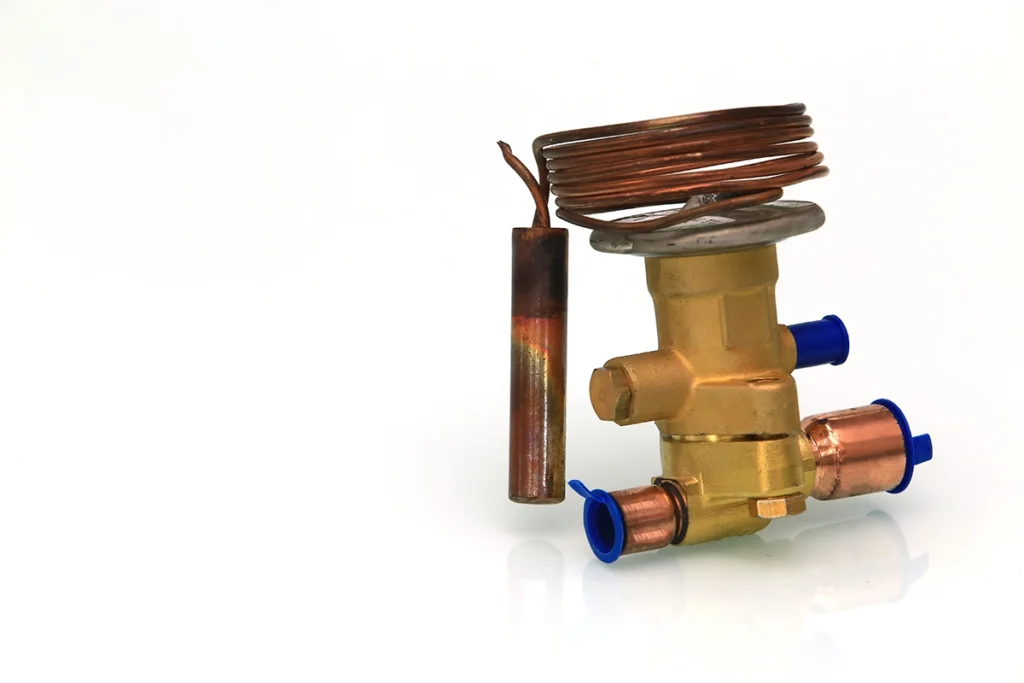
AC Expansion Valve: Signs, Problems & Expert Repair
When your air conditioner isn’t cooling properly, the problem might be hiding inside a small but critical component. This vital part is called the AC expansion valve. It plays a major role in your cooling system’s ability to remove heat from your home. When it fails, you’ll notice uncomfortable indoor temperatures fast. We’ve diagnosed countless cooling problems that trace back to expansion valve issues. As a result, we’re here to help you understand what this component does and why it matters to your comfort. What Does an AC Expansion Valve Do? The expansion valve serves as a metering device that controls refrigerant flow. Specifically, it regulates flow between your system’s high-pressure and low-pressure sides. Think of it as a gatekeeper that regulates exactly how much refrigerant enters the evaporator coil at any given moment. This precise control is essential for proper operation. The refrigerant needs to expand and evaporate at just the right rate to absorb heat from your indoor air efficiently. As refrigerant passes through this valve, it experiences a dramatic pressure drop. That pressure change causes the liquid refrigerant to begin transforming into a cold vapor. The cold vapor then flows through the evaporator coil where it absorbs heat from your home. Without this critical pressure reduction, your air conditioner simply can’t perform the heat exchange necessary to cool your space. Modern air conditioning systems rely on this component to maintain optimal efficiency. When functioning correctly, the valve adjusts refrigerant flow based on cooling demand. This ensures your system doesn’t work harder than necessary while still keeping you comfortable. Common Signs Your AC Expansion Valve Is Failing Recognizing the warning signs of a failing expansion valve can help you know when to call for professional service. Early detection prevents problems from leading to more extensive damage. We’ve seen these symptoms appear repeatedly in systems with valve issues. Therefore, pay attention if you notice any of these red flags. Inconsistent Cooling Throughout Your Home When the expansion valve starts to malfunction, you might notice some rooms feel colder than others. Alternatively, your entire home may feel warmer than the thermostat setting indicates. This happens because the valve isn’t regulating refrigerant flow properly. Consequently, this disrupts the cooling cycle. The evaporator coil may not receive enough refrigerant to cool effectively. On the other hand, it might get flooded with too much liquid refrigerant. Frost or Ice Buildup on the Coil A stuck or partially clogged valve can restrict refrigerant flow too much. This causes abnormally low temperatures and pressure at the evaporator coil. As a result, frost or ice formation develops on the coil itself or on the refrigerant lines. While ice might seem like a sign your system is working extra hard to cool your home, it’s actually preventing proper heat absorption. Moreover, it reduces efficiency dramatically. Unusual System Behavior An expansion valve problem can cause your AC to short cycle. This means turning on and off repeatedly without completing a full cooling cycle. You might also hear strange hissing or bubbling noises near the indoor unit. These sounds indicate refrigerant isn’t flowing smoothly through the system. Such symptoms suggest the valve is either stuck open, stuck closed, or fluctuating between positions when it should maintain steady control. How AC Expansion Valves Fail Understanding why these valves fail helps explain why professional diagnosis and repair are so important. Several factors can contribute to expansion valve problems. In fact, identifying the root cause prevents recurring issues down the road. Contamination and Debris The small passages inside an expansion valve can become clogged with debris, dirt, or moisture that enters the refrigerant system. Even tiny particles can partially block the valve opening. This disrupts proper refrigerant flow. Moisture is especially problematic because it can freeze inside the valve. Frozen moisture creates ice blockages that prevent normal operation. Mechanical Wear and Component Failure Over time, the internal components of the valve can wear out from constant use. Springs may weaken, seals can deteriorate, and moving parts might stick or bind. Since the valve continuously adjusts to changing conditions, these mechanical components experience significant stress throughout their service life. Eventually, normal wear takes its toll. The valve then loses its ability to regulate refrigerant accurately. Refrigerant System Issues Problems elsewhere in your cooling system can put extra strain on the expansion valve. For example, low refrigerant levels, compressor issues, or restricted airflow all affect system pressures. These pressure changes impact how the valve functions. Sometimes what appears to be an expansion valve problem is actually a symptom of another underlying issue that needs attention first. Types of Expansion Valves in AC Systems Not all air conditioners use the same type of metering device. Understanding which type your system has helps explain its performance characteristics and maintenance needs. Thermostatic Expansion Valves (TXV) The thermostatic expansion valve is one of the most common types found in residential and commercial cooling systems. It uses a sensing bulb attached to the evaporator coil outlet to monitor refrigerant temperature and superheat. Based on these readings, the TXV automatically adjusts refrigerant flow to maintain optimal cooling performance across varying conditions. This self-regulating feature makes TXV systems highly efficient. However, it also means more components that can potentially fail. Electronic Expansion Valves (EEV) Newer, high-efficiency systems often use electronic expansion valves controlled by the system’s computer board. These valves offer even more precise refrigerant control than mechanical TXVs. They provide superior performance because they receive input from multiple sensors and can make instant adjustments. While they provide superior performance, they’re also more complex. Consequently, they require specialized diagnostic equipment when problems arise. Why Professional Diagnosis Is Essential Diagnosing expansion valve problems requires specialized knowledge, tools, and EPA certification to handle refrigerants legally and safely. Our certified technicians use precise pressure gauges, superheat and subcooling calculations, and temperature measurements. These tools help determine exactly what’s happening inside your system. Many homeowners assume their AC just needs more refrigerant when they experience cooling problems. However, refrigerant doesn’t get “used up” in