
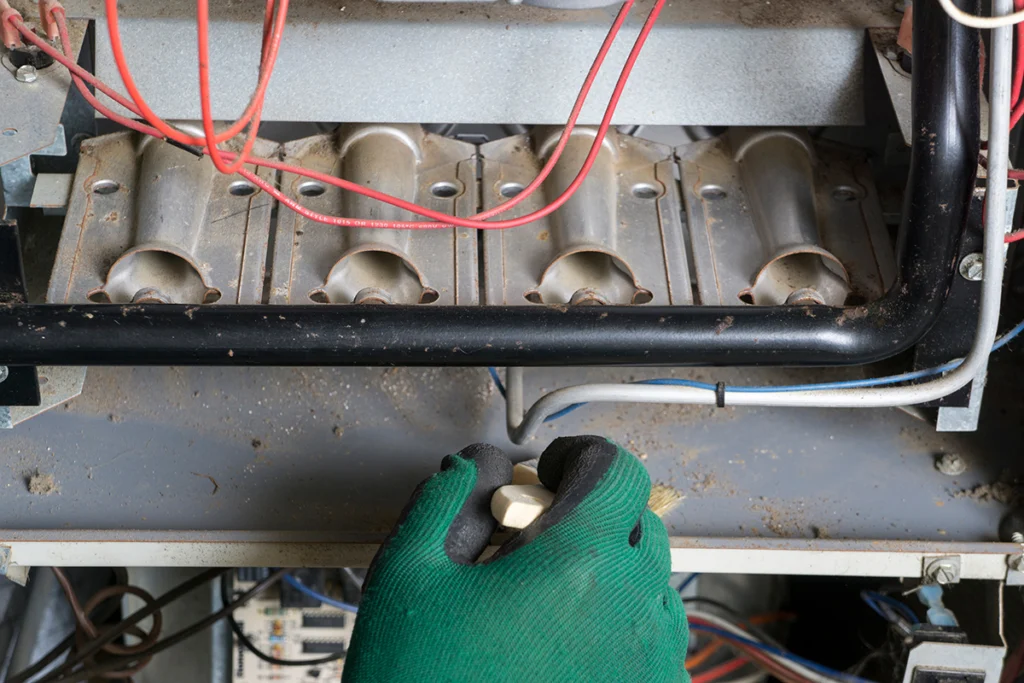
Furnace Heat Exchanger Warning Signs
When homeowners ask why their system smells odd, cycles too often, or delivers weaker heat than usual, we usually look at the furnace heat exchanger first. After years of working on heating equipment at C&R Services, we know this component is one of the most important parts of any furnace. Although most homeowners never see it, the exchanger handles heat transfer and protects your home from harmful combustion gases. When something goes wrong, the symptoms can seem small at first, yet they carry serious risks if ignored. What the Furnace Heat Exchanger Actually Does Before you can spot warning signs, it helps to understand the role of the furnace heat exchanger inside the system. This metal chamber separates the air you breathe from the furnace’s combustion process. As the burners create heat, the exchanger warms up and transfers that heat to the air moving through your ducts. Because combustion gases must stay sealed inside the chamber, any crack or breach can lead to unsafe conditions. Technicians sometimes compare this part to an engine block because both hold heat and contain combustion gases. And while that comparison is helpful, the exchanger is actually more fragile. It expands and contracts with every heating cycle, which is why regular maintenance matters so much. If you’d like a clearer breakdown of how the entire furnace works—from ignition to heat distribution—our furnace guide walks through the full process. Common Furnace Heat Exchanger Warning Signs Although no two homes are alike, certain warning signs appear again and again. Because we inspect systems every day at C&R Services, we’ve learned that most heat exchanger problems show up in predictable ways. 1. Strange Smells During Heating Cycles If you smell a burning or metallic odor when the furnace runs, take it seriously. These odors often appear before any visible damage forms. According to the U.S. Consumer Product Safety Commission, carbon monoxide from fuel-burning appliances kills more than 200 people in the U.S. each year. Because a damaged furnace heat exchanger can allow combustion gases to escape, unusual smells or irritated sinuses should never be ignored. It also helps to make sure your carbon monoxide detectors are installed and working, since CO is colorless and odorless. If something feels off, it’s safer to shut the system down and have it inspected right away. 2. Frequent Short Cycling When the furnace turns on and off too often, the heat exchanger might be overheating. Because overheating forces the system to shut down for protection, it’s worth checking. Short cycling can also involve the system’s safety controls, and we explain that issue in more detail in our blog about the furnace limit switch. 3. Visible Rust or Corrosion A rusty heat exchanger is a weakened heat exchanger. Condensation, old age, and poor airflow all speed up deterioration. While rust isn’t always a sign of cracks, it does mean the metal is thinning. A thin exchanger is more likely to fail. How Performance Changes Point to Furnace Heat Exchanger Trouble Even if you don’t see the exchanger directly, the furnace will usually tell you something is off. Weak or Uneven Heat Output A damaged exchanger sometimes prevents the furnace from producing steady heat. Air may feel warm one moment and cool the next. Homeowners often think a faulty blower is the cause, but that’s not always true. Sometimes this uneven heat shows up alongside other problems, which we cover in our blog about why your heater may be blowing cold air. If cold air appears randomly, the exchanger could be involved. Unexpected Noises During Operation A cracked furnace heat exchanger sometimes makes popping or tapping sounds as the metal expands. These sounds aren’t always dramatic, but they often repeat at the same point in the heating cycle. Because furnaces are usually tucked away, these noises can go unnoticed for months. Tripped Safety Devices Modern furnaces include several safety components. When the exchanger overheats or leaks, one of these devices will usually shut the system down. While that might feel frustrating, it’s the furnace keeping your home safe. If the furnace refuses to stay on, the exchanger could be the reason. What Causes Furnace Heat Exchanger Damage Although every home is different, a few root causes appear in most systems. Restricted Airflow When airflow drops, temperatures rise inside the exchanger. Dirty filters, blocked returns, or closed supply vents all contribute to overheating. Because heat has nowhere to escape, the chamber expands too quickly and stresses the metal. Old Age and Daily Stress Even well-maintained furnaces wear down over time. The exchanger expands and contracts thousands of times each heating season. Eventually, metal fatigue sets in. The U.S. Department of Energy explains that older furnace systems typically operate in the 56–70% AFUE range, while today’s high-efficiency models can reach 90–98.5%. Because of that gap, older units face more strain during normal operation, which makes the heat exchanger more vulnerable as the system ages. Poor Burner Combustion If burners aren’t adjusted correctly, flames can hit the exchanger unevenly and create hot spots. These hot spots weaken the metal long before you see visible damage. Why You Should Never Ignore Furnace Heat Exchanger Issues The furnace heat exchanger isn’t just another part—it’s a safety barrier. A damaged exchanger can allow carbon monoxide or combustion gases into your home. Because of that risk, we always encourage homeowners to call a professional as soon as they notice warning signs. At C&R Services, we use advanced diagnostic tools to confirm whether the exchanger is safe to use or needs replacement. How C&R Services Inspects a Furnace Heat Exchanger Our team follows a detailed inspection process that prioritizes safety and accurate diagnostics. We check for heat-related damage We inspect for cracks, separation lines, and rust We test for pressure leaks We verify that safety devices still work correctly We review airflow and burner performance Because we’ve seen every type of heating setup—from older units to modern high-efficiency furnaces—we know exactly where problems tend to hide. When to Schedule Professional Service