

Call Us (903) 204-7571 Today

“Taught By Fathers, Trusted By Families”

Furnaces

Furnace thermostat not responding to temperature changes in Brownsboro, with homeowners checking a wall thermostat in a cool living room
Furnaces, Repair, Thermostats

Furnace Thermostat Not Responding to Temperature Changes in Brownsboro

Your furnace thermostat not responding to temperature changes in Brownsboro becomes a real problem as the weather cools. The most common culprit is a dead battery or a tripped circuit breaker cutting power to the thermostat itself. Before temperatures drop further, it’s worth checking the batteries and your breaker panel. Both are quick, safe checks that take just a moment. That said, non-responsive thermostats can also point to wiring issues or a failing thermostat sensor. Or they can signal communication problems between your thermostat and furnace that require a licensed technician to diagnose safely. We’ve helped countless homeowners in Brownsboro pinpoint the root cause and restore reliable heat. So you’re not left guessing when comfort matters most. Why Your Furnace Thermostat Isn’t Responding to Temperature Changes It’s a common scenario. Few things are more frustrating during a Brownsboro winter than adjusting your thermostat and hearing nothing in response. You turn the dial or press the button. Then you wait for the familiar click and whoosh of warm air, only to hear nothing. Your furnace sits idle while the temperature in your home continues to drop. When your furnace thermostat isn’t responding to temperature changes, you’re not just dealing with inconvenience. You’re facing a potential safety concern and the very real risk of frozen pipes or extended discomfort for your household. A non-responsive thermostat can stem from several issues. Battery failure or a tripped breaker are the simplest causes. More complex problems include wiring faults or a failing control board inside the furnace itself. Sometimes the thermostat has lost its connection to the furnace. This can happen either through a loose wire or a communication error in newer digital systems. In other cases, the sensor that reads room temperature has drifted out of calibration or failed completely. That sensor is called the thermistor in most modern units. This leaves your system unable to “see” that the temperature has dropped, the same breakdown behind a thermostat that stops working altogether. Whatever the root cause, a furnace that won’t respond when you need heat is an urgent situation. Checking your thermostat batteries and breaker panel are safe initial steps. But if the system still won’t fire up, it’s time to call C&R HVAC. We can diagnose the issue quickly and restore your heating before the cold settles in. Common Causes of a Furnace Thermostat Not Responding to Temperature Changes in Brownsboro Here’s what’s usually behind it. When your furnace thermostat isn’t responding to temperature changes in Brownsboro, a few common culprits are usually to blame. Understanding these root causes helps you recognize the urgency and gives us a head start when diagnosing your system. The most frequent issue we see is a dead or dying battery in the thermostat itself. Many modern models rely on AA or AAA batteries that need replacement every year or two. When these batteries lose charge, the thermostat display may dim or disappear entirely, and communication with your furnace stops. Another common cause is a tripped circuit breaker or blown fuse dedicated to the HVAC system. This cuts power to both the thermostat and the furnace, leaving your heating unresponsive. Wiring problems often create intermittent or complete failures. Over time, loose terminal connections, corroded wires, or physical damage from pests or renovations can disrupt the low-voltage signal. That signal normally runs between the thermostat and the furnace control board. We also frequently encounter thermostats that have drifted out of calibration or accumulated dust inside the housing. Either problem can interfere with the temperature sensor. In homes with older mercury-switch thermostats, a unit that’s no longer level on the wall won’t trigger correctly. The mercury bulb inside must tilt precisely to complete the circuit. When we respond to a non-responsive thermostat call, we check power supply, wiring integrity, thermostat calibration, and the furnace control board to pinpoint the exact failure point. Professional diagnosis with a multimeter and knowledge of HVAC control circuits is the fastest path to restoring your heat. If your thermostat isn’t triggering temperature changes, contact C&R HVAC and we’ll get your Brownsboro home warm again. Safe Checks Before You Call a Technician A few quick checks help. If your furnace thermostat isn’t responding to temperature changes, a few simple observations can help you identify the issue. At the very least, they give us useful information when you contact us. First, check that the thermostat is set to “heat” mode. Also verify that the target temperature is higher than the current room reading. If you have a battery-powered model, low batteries are a common culprit. A dimmed or blank display often signals it’s time for fresh batteries. You can also verify that your furnace’s circuit breaker hasn’t tripped. Make sure the furnace power switch is in the on position. It’s often located on or near the unit and resembles a standard light switch. A tripped breaker or accidentally flipped switch can cut power to the entire system, leaving the thermostat unable to communicate. Finally, take a quick look at your air filter. A heavily clogged filter can cause the furnace to overheat and shut down repeatedly. This makes it appear unresponsive to thermostat commands. These checks are safe and require no tools. But if they don’t resolve the issue, it’s time to call C&R HVAC. We’ll diagnose wiring faults, control board failures, and other hidden problems that only professional equipment can pinpoint. Keep Your Brownsboro Home Comfortable This Winter Comfort shouldn’t be a guessing game. When your furnace thermostat isn’t responding to temperature changes, you’re left in that frustrating limbo. You might end up bundling up indoors or dealing with unpredictable heating that never quite settles where you need it. Winter in Brownsboro doesn’t bring harsh Arctic freezes. But those chilly nights and damp mornings mean you still count on reliable warmth at the touch of a button. A non-responsive thermostat doesn’t just chip away at your comfort, and left alone it can feel like the heat never turning on. It can drive up your energy
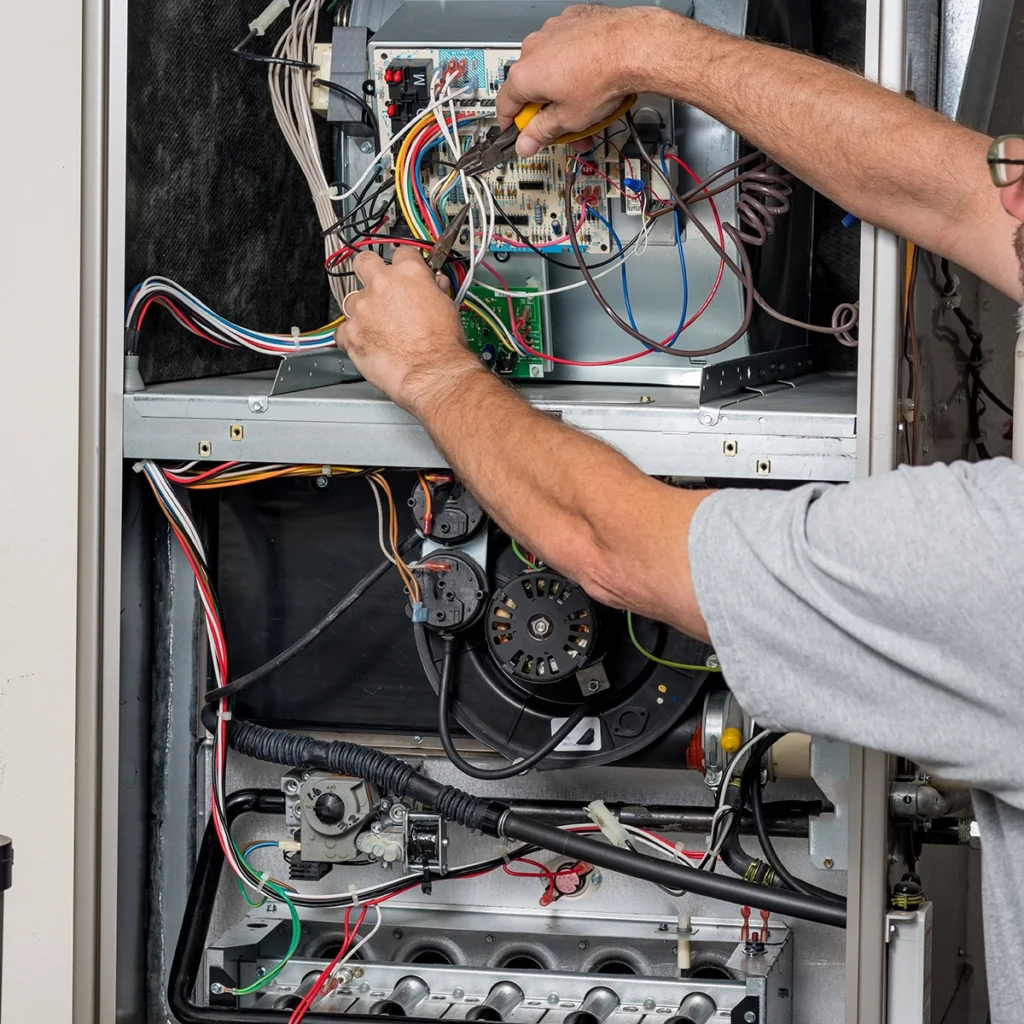
Technician inspecting furnace blower motor making a loud grinding noise in Tyler
Furnaces, Maintenance, Repair

Furnace Blower Motor Making Loud Grinding Noise in Tyler

You hear your furnace blower motor making a loud grinding noise in Tyler. That usually means something inside the blower assembly is no longer moving as smoothly as it should. The sound may come from worn motor bearings, a loose component, or a blower wheel that has shifted out of position. A furnace can make several different noises during normal operation, but persistent grinding or scraping deserves attention. The blower motor moves heated air through your ductwork and into your home, so problems with this component can eventually affect airflow and heating performance. At C&R HVAC, we help homeowners throughout Tyler and surrounding East Texas communities diagnose furnace noises. We also determine whether the blower assembly needs an adjustment, repair, or replacement. Why Is Your Furnace Blower Motor Making a Grinding Noise? The blower motor powers the fan that circulates heated air throughout your home. When the motor and blower assembly are operating correctly, you may hear a steady hum or the sound of moving air. Grinding is different. One possible cause is worn motor bearings. Bearings support the rotating shaft inside the blower motor. As they wear, the motor may begin producing grinding, scraping, or other unusual sounds. A technician may also find loose mounting hardware or a blower wheel that has shifted out of position. A technician may also find loose mounting hardware or an issue with the blower wheel. Because several components can produce similar sounds, the noise alone does not always tell you exactly what has failed. The important thing is noticing when the furnace sounds different from normal. Common Causes of a Loud Grinding Blower Motor Several mechanical problems can create this type of sound. If you have a furnace blower motor making a loud grinding noise in Tyler, several issues are common. Worn bearings, a loose blower wheel, or mounting problems are some of the first things a technician may check. Worn Motor Bearings Bearings support the rotating shaft inside the blower motor. As they wear, you may hear grinding that becomes more noticeable when the blower starts or while it runs. Depending on the motor design and its overall condition, the appropriate repair may involve servicing or replacing the motor. A Loose or Misaligned Blower Wheel The blower wheel spins rapidly to move air through the furnace and duct system. If the wheel loosens, shifts, or becomes damaged, it may rub against the surrounding housing. That contact can create a scraping or grinding noise even when the motor itself is still operating. Loose Mounting Hardware Vibration from years of furnace operation can sometimes loosen hardware around the motor or blower assembly. A motor that is no longer held securely may vibrate or shift while running. A technician can inspect the assembly and determine whether loose hardware is responsible for the sound. Debris Inside the Blower Assembly Dust and debris can accumulate around HVAC components over time. In some cases, foreign material can interfere with the blower wheel or contribute to unusual noises. Regular HVAC maintenance can help catch buildup and other developing issues before they begin affecting system operation. Signs Your Furnace Blower Motor May Be Failing A grinding furnace blower motor in Tyler may be the first symptom you notice, but blower problems can affect more than sound. Pay attention to the airflow coming from your vents. If it suddenly feels weaker than normal, the blower may no longer be moving air effectively. You could also notice certain rooms taking longer to warm up. A struggling blower motor may occasionally stop running altogether or operate inconsistently. In some cases, a broader furnace startup problem may appear alongside blower issues. Some homeowners also notice electrical problems, such as repeated breaker trips. These symptoms do not automatically mean the blower motor needs replacement. Airflow problems, for example, can also come from a dirty filter or another HVAC issue. A professional diagnosis helps separate a motor problem from another cause. Can You Keep Running a Furnace That Is Grinding? It depends on what is causing the sound, but a persistent grinding noise should not be ignored. Continued operation can allow a loose or worn component to deteriorate further. For example, a blower wheel rubbing against its housing may experience additional wear, while failing motor bearings may continue becoming noisier. If the grinding is loud or suddenly started, turning the furnace off and arranging an inspection is the safest approach. This is especially important if the noise appears along with a burning smell, smoke, repeated breaker trips, or a blower that stops moving air. You do not need to disassemble the blower compartment yourself. Furnace motors involve electrical components and moving parts that are better inspected with the power safely disconnected. A Dirty Filter Can Put Extra Strain on the System Your blower motor depends on unrestricted airflow through the HVAC system. A heavily clogged filter makes it harder to move air through the furnace. The EPA notes that a dirty, clogged filter can reduce airflow, increase furnace run time, and increase wear on the blower motor. Checking the filter is one simple step you can take before scheduling service. If it is visibly dirty, replace the furnace filter with the correct size and type for your system. Regular maintenance matters, too. ENERGY STAR recommends checking filters regularly and cleaning or adjusting blower components to maintain proper system airflow. However, replacing a dirty filter is unlikely to eliminate a true mechanical grinding sound caused by worn bearings or a damaged blower assembly. If your furnace blower motor is still making a loud grinding noise, the system should be inspected. Repairing vs. Replacing a Furnace Blower Motor Hearing a grinding noise does not automatically mean you need a new furnace. In some cases, the problem may involve a loose blower wheel, mounting hardware, or another component that can be corrected without replacing the entire motor. Other situations involve a motor that has worn enough that replacement makes more sense. Several factors influence that decision, including: The

Scroll to Top