
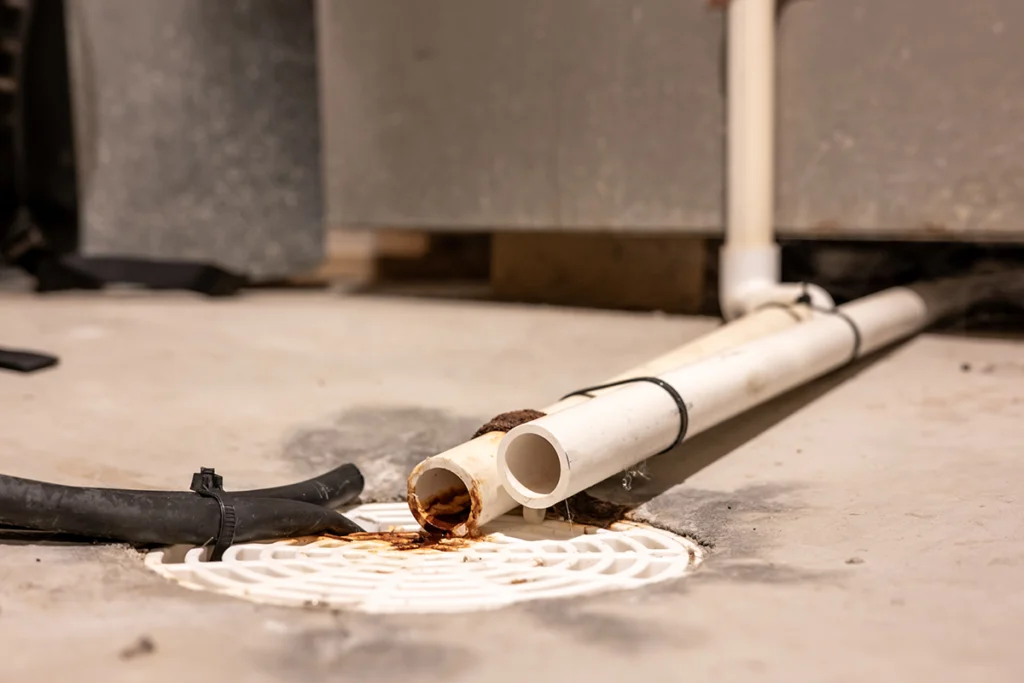
Air Handler Condensate Drain Line Clogged in Kilgore, TX
When your air handler condensate drain line is clogged in Kilgore, TX, water can’t drain properly from your cooling system. Depending on your system’s safety features, the AC may shut down to protect your home or allow water to overflow near the indoor unit. Either situation can leave you dealing with discomfort, ceiling stains, damaged insulation, or moisture problems. If the water isn’t addressed promptly, mold growth may also develop in affected areas. Fortunately, a clogged condensate line is usually straightforward for a licensed HVAC technician to diagnose and clear. Addressing the problem early helps reduce the risk of water damage and more expensive repairs. What Happens When Your Air Handler Condensate Drain Line Clogs Your air handler does more than move cooled air through your home. As warm indoor air passes over the cold evaporator coil, moisture condenses on its surface. That water collects in a drain pan and flows through a condensate line to an approved drainage location. When algae, sludge, or debris blocks the line, water backs up instead of draining away. You might notice puddles around your indoor unit, higher humidity levels, or a musty smell near the air handler. Some systems have a float switch that shuts off cooling when backed-up water reaches a certain level. This safety feature helps protect your home from overflow damage. However, not every air handler has the same safety controls. If a switch is missing or fails, water may escape the drain pan and damage surrounding materials. According to ENERGY STAR, a plugged condensate drain can cause water damage, affect indoor humidity levels, and encourage bacteria and mold growth. Left unchecked, moisture may damage ceilings, walls, and insulation. Persistent dampness can also create conditions that support mold growth around the air handler. When we respond to a clogged condensate drain line in Kilgore, TX, we inspect the drain pan and check for standing water. We also evaluate the float switch, clear the blockage, and examine the line for improper slope or other drainage problems. If you notice water pooling near your air handler or your system has stopped cooling, contact C&R Heating & Cooling for professional service. Signs Your Air Handler Condensate Drain Line Is Clogged in Kilgore, TX When your air handler’s condensate drain line becomes clogged, several warning signs may appear before serious damage occurs: Water pooling around the base of your indoor unit Standing water in the drain pan beneath the air handler Musty odors near your vents or air handler closet Unexpected system shutdowns or interrupted cooling Higher humidity levels indoors Standing water may appear because moisture collected during cooling isn’t draining properly. Algae, dust, and debris can obstruct the line, causing condensation to back up. As explained in our article about the air conditioner drain pan, an overflowing pan can lead to leaks, ceiling stains, and moisture damage. The EPA recommends checking cooling coils, condensate pans, and nearby insulation for standing water, debris, and moisture damage. These conditions may indicate a drainage problem that needs attention. If your system shuts down unexpectedly, an overflow safety switch may have activated. However, other cooling or electrical problems can cause similar symptoms. When we inspect an air handler condensate drain line clogged in Kilgore, TX, we check the drain line, pan, and safety controls to identify the problem and recommend appropriate repairs. Why Air Handler Drain Lines Clog Your air handler’s condensate drain line carries moisture away from the evaporator coil as your system runs. Over time, several factors can cause blockages. These obstructions interfere with proper drainage and may lead to water damage or system shutdown. One common cause is biological buildup. Algae, bacteria, and other microorganisms can develop in the damp environment inside the drain line. As this buildup accumulates, it narrows the pipe and restricts water flow. Dust and dirt that collect around the evaporator coil may also wash into the drain pan. These particles can mix with moisture to form sludge that settles inside the drainage system. In Kilgore, TX homes, dust and pollen entering the HVAC system can contribute to buildup around the indoor coil, particularly when filters aren’t changed regularly. Some systems also have a condensate trap, a U-shaped section of piping that helps maintain proper drainage under the air handler’s operating pressure. These traps can collect debris and become clogged over time. Additionally, pipes with improper slopes or sagging sections may hold standing water, increasing the likelihood of buildup. When we inspect an air handler condensate drain line clogged with debris, we identify the obstruction and evaluate the surrounding drainage components. We also check the trap and pipe slope for conditions that could contribute to recurring problems. Regular professional HVAC maintenance helps keep condensate lines clear and reduces the risk of unexpected drainage issues. What Our Team Does to Clear a Clogged Condensate Drain Line When we respond to a clogged condensate drain line call in Kilgore, TX, we start by inspecting the air handler, drain pan, and accessible drainage components. Our technicians locate the drain line’s service access point and look for signs of standing water or visible obstructions. We also check whether the blockage appears near the air handler, inside the trap, or farther along the drainage path. Many clogs develop from algae, biological residue, and accumulated debris. Depending on the drain configuration and condition, we may use professional suction equipment or an appropriate flushing method to remove the obstruction. Once the blockage is cleared, we test drainage flow to confirm that condensation can move through the line properly. We also inspect the drain pan for cracks, corrosion, or other conditions that may allow water to escape. Before completing the service, we evaluate the primary drain connection and any secondary drainage or overflow protection components. If the system has a float switch, we test its operation. We also check for improper pipe slope, damaged fittings, or other issues that could contribute to recurring backups. Finally, we verify that the air conditioning system operates normally after the drainage