Call Us (903) 204-7571 Today

“Taught By Fathers, Trusted By Families”

October 3, 2026

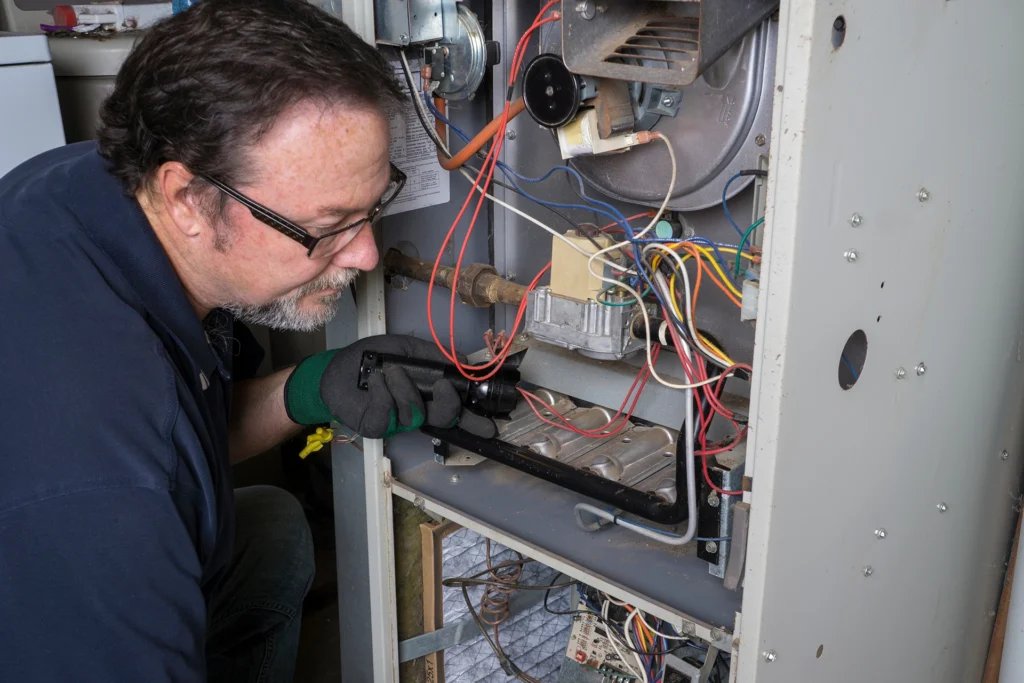
Furnace blower motor capacitor failing in Lindale, TX: technician inspecting internal components inside an open gas furnace
Furnaces, Maintenance, Repair

Furnace Blower Motor Capacitor Failing in Lindale, TX: Root Causes

If your furnace blower motor capacitor keeps failing in Lindale, TX, the real problem usually isn’t the capacitor itself. It’s something else in the system that’s overworking or damaging it. A capacitor is designed to give the blower motor the electrical boost it needs to start and run smoothly. However, when that motor struggles due to restricted airflow, voltage irregularities, or motor wear, the capacitor bears the extra load. We see homeowners replace capacitors only to encounter similar problems later. That’s why identifying contributing conditions matters. The EPA points out that a clogged filter can significantly reduce airflow, increase furnace run time, and add wear to the blower motor. Understanding what’s causing repeated capacitor problems helps homeowners make informed repair decisions. Why Your Furnace Blower Motor Capacitor Keeps Failing If your furnace blower motor capacitor keeps burning out after each replacement, the capacitor itself isn’t the problem, it’s a symptom of a larger issue upstream. Capacitors store and release electrical energy to start the blower motor. When something forces the motor to draw more current than it should, the capacitor overheats and fails. Replacing the part without diagnosing why it failed in the first place simply sets up the next failure. The most common root causes include: Dirty or clogged air filter, restricts airflow, forcing the blower motor to work harder and pull extra current that overheats the capacitor. Failing blower motor bearings, create drag and resistance, increasing the electrical load and stressing the capacitor beyond its design limits. Incorrect capacitor rating, a replacement with the wrong microfarad (µF) rating cannot handle the motor’s actual demand and burns out quickly. Voltage fluctuations or electrical supply problems, unstable power from the breaker panel or loose wiring sends voltage spikes that degrade the capacitor. Blocked return or supply vents, starve the system of air, causing the motor to strain and overheat. Blower motor nearing end of life, draws irregular current as internal windings deteriorate, damaging new capacitors. When we respond to a repeat capacitor failure in Lindale, we check voltage at the source first. Then we measure the motor’s amp draw under load. We also inspect the air filter and ductwork for restrictions, and we test the motor bearings before installing a new capacitor. Identifying and correcting the underlying cause protects your investment and keeps your furnace running reliably. Common Causes of a Failing Capacitor in Lindale, TX The most common root causes we see include electrical supply problems, overheating from restricted airflow, and wear in the blower motor itself. Voltage spikes or sags from your home’s electrical panel can degrade a capacitor’s dielectric material (the insulation that separates the internal plates), causing it to bulge or leak. Dirty filters or blocked return vents force your blower motor to work harder and run longer. This generates excess heat that radiates into the capacitor and shortens its lifespan. If the motor itself has worn bearings or a damaged winding, it draws more current than normal. That extra load cooks the capacitor over time. In Lindale’s warm climate, attic-mounted air handlers often experience temperature extremes that accelerate capacitor wear. This is especially true when poor insulation or ventilation lets heat build up around the unit. When homeowners experience a furnace blower motor capacitor failing in Lindale, TX, we often find that environmental factors combined with mechanical stress create the perfect storm for premature component breakdown. When we respond to a capacitor failure, we first test the electrical supply at the unit to confirm clean, stable voltage. Next, we inspect the blower motor for mechanical resistance, unusual noise, or heat buildup. We check airflow across the system, including filters, registers, ductwork, and the evaporator coil. We measure the current draw (amperage) of the motor under load to see if it’s pulling more power than the nameplate rating allows. Only after identifying the underlying cause do we recommend a capacitor replacement. A new part installed into a damaged system will fail again, often within weeks. What Happens When Only the Capacitor Is Replaced When a furnace blower motor capacitor fails, the quickest fix seems obvious: swap in a new capacitor and move on. The blower starts running again, the air flows, and the problem appears solved. But if the underlying cause isn’t identified and corrected, the same failure will occur in weeks or months. Worse, it can damage components that cost far more to replace. A capacitor can deteriorate naturally over time. However, electrical and mechanical problems may also contribute to premature failure. Voltage fluctuations can damage the capacitor’s internal components. A blower motor with worn bearings may struggle to operate properly and place additional stress on the system. Airflow restrictions can also affect heating performance and increase equipment wear. When we respond to a capacitor failure in Lindale, we check the voltage supply, measure the motor’s amp draw against its nameplate rating, inspect the blower wheel and housing for obstructions, and test the motor windings for developing shorts. If a problem turns up and isn’t corrected, the new capacitor inherits the same stress that destroyed the first one. We’ve seen homeowners experience two or three capacitor failures in a single season. This happens because the real issue was never addressed. A failing motor, a clogged filter cabinet, or a control board sending irregular voltage are often to blame. Each time, the labor and the part add up. Eventually the motor itself seizes or a transformer burns out. A diagnostic process is designed to find what caused the failure. It doesn’t just reset the clock on the symptom. When you call C&R HVAC, we make sure the repair solves the problem at its root. You won’t pay for the same fix over and over. When to Call for Furnace Blower Motor Help If you notice weak airflow from your vents, unusual humming or clicking sounds from the furnace cabinet, or your system starting and stopping repeatedly, your furnace blower motor capacitor may be failing. These signs often appear gradually but can escalate quickly. A struggling
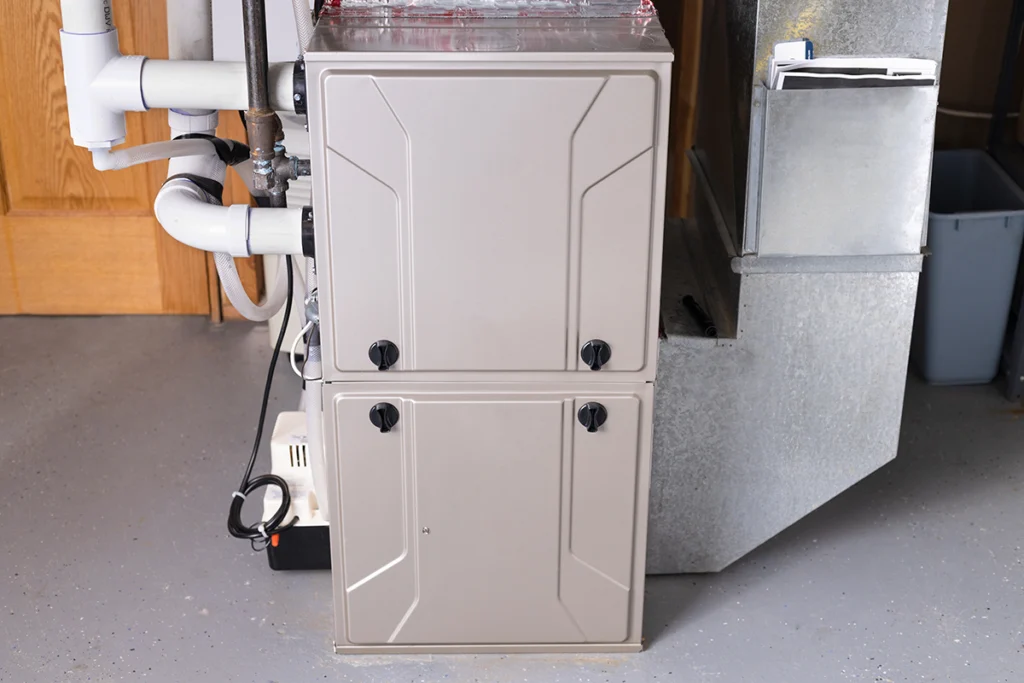
Furnace blower motor running continuously without stopping in winona: high-efficiency residential furnace installed
Furnaces, Maintenance, Repair

Furnace Blower Motor Running Continuously Without Stopping in Winona

When temperatures drop in Winona and you’re counting on your furnace to keep your home comfortable, a furnace blower motor running continuously without stopping is more than an annoyance, it’s a red flag that something in your system is off. A blower motor that won’t stop usually points to a thermostat wiring issue, a stuck relay, or a fan limit switch problem, not a motor that’s simply worn out. Before you assume you need replacement parts, it’s important to understand that the motor itself is rarely the root cause. In fact, we’ve seen too many homeowners replace a blower motor only to have the new one fail just as quickly, because the underlying problem was never addressed. Why Is My Furnace Blower Motor Running Continuously? When your furnace blower motor runs continuously without stopping, the problem is rarely the motor itself. Instead, it’s almost always a signal that an upstream control or safety component has failed. The most common culprits include a faulty limit switch, a stuck thermostat relay, or a misconfigured fan setting on your thermostat. A faulty limit switch prevents your furnace from knowing when to turn off, so the blower keeps running even after your home reaches the set temperature. Other triggers include a shorted low-voltage wire or a failing control board that sends constant “on” signals. A thermostat set to “fan on” instead of “auto” can also cause this. That last one is an easy check you can make before calling. Still, nonstop operation isn’t just a waste of energy. It tells us something in the safety or control chain is broken. For instance, the blower may be compensating for a furnace that’s overheating. A relay can also weld shut from electrical stress. If you simply replace the motor without diagnosing why it ran nonstop, the new motor will face the same strain. It will fail again, often faster. When you call us in Winona, we test the limit switch, thermostat wiring, control board, and airflow to find the real cause. We stand behind every repair with a workmanship warranty. Our licensed technicians make sure the entire system is safe before we leave. Common Causes of a Furnace Blower That Won’t Stop When your furnace blower motor keeps running continuously, the cause is almost always upstream of the motor itself. Simply replacing the motor won’t fix the problem. You need to identify what’s forcing it to run nonstop. Otherwise, the same issue will destroy the replacement. Here are the most common culprits we find during service calls in Winona: Thermostat stuck on “Fan On” mode. Your thermostat has two fan settings: “Auto” and “On.” Auto means the blower runs only when heating. On means the blower runs all the time. If someone accidentally switched it to “On,” the blower will never stop. A malfunctioning thermostat can also send a continuous call signal even when set correctly. Failed fan limit switch. The fan limit switch controls when the blower activates and shuts down. It also safeguards against dangerous overheating. When this switch fails in the closed position, the circuit stays complete. The blower runs nonstop. Your furnace loses the signal to turn the blower off. Shorted or damaged control wiring. A short in the low-voltage wiring between your thermostat and furnace can create a constant “run” signal. Frayed insulation, pinched wires, or corrosion at terminals all send false commands. The blower keeps spinning. Control board relay stuck closed. Modern furnaces use a control board with relays that open and close circuits. When the blower relay welds itself shut, it can’t break the circuit. The blower never receives the “off” command. When we respond to a furnace blower motor running continuously without stopping, we test each component to find the real cause. Only after identifying why the motor won’t shut off do we recommend repair or replacement. What Happens When You Only Replace the Blower Motor When your blower motor fails and you replace only that part without finding out why it failed, you’re setting yourself up for another problem. The new motor may face the same conditions that contributed to the original failure. If a clogged filter or blocked return duct caused overheating, the replacement could experience similar problems. According to the EPA, a clogged filter can dramatically reduce airflow and force a system to run longer. This adds wear to the blower motor. A failing blower motor capacitor can also interfere with motor operation and contribute to overheating. If a stuck relay keeps power flowing when the system should shut off, replacing the motor alone won’t correct the problem. The blower may continue running until the faulty control is repaired. We’ve responded to countless service calls where a homeowner hired someone who skipped the diagnosis, only to have the new part fail before the season ended. When the underlying cause goes unaddressed, the damage often spreads. A failing capacitor that killed the first motor can take out the control board next. A drainage blockage that caused the original motor to work harder can flood the cabinet and corrode electrical connections. A shorted thermostat wire that kept the blower energized can trip breakers or even create a fire risk. When we diagnose a failed blower motor, we test the electrical supply and measure airflow and static pressure. We inspect the ductwork for restrictions and check the capacitor and relay. We verify that the thermostat and limit switch are cycling properly. That diagnosis protects your investment in the replacement part and prevents the next, more expensive failure down the line. Get Your Furnace Diagnosed by C&R HVAC When your furnace blower motor won’t stop running, the cause could be electrical, mechanical, or embedded in your control system. Guessing at the fix often makes the problem worse. Our licensed technicians bring the diagnostic tools and experience needed to pinpoint the issue. We identify what’s keeping your blower in constant operation. This could be a faulty limit switch, a stuck relay, a thermostat wiring issue, or a hidden airflow

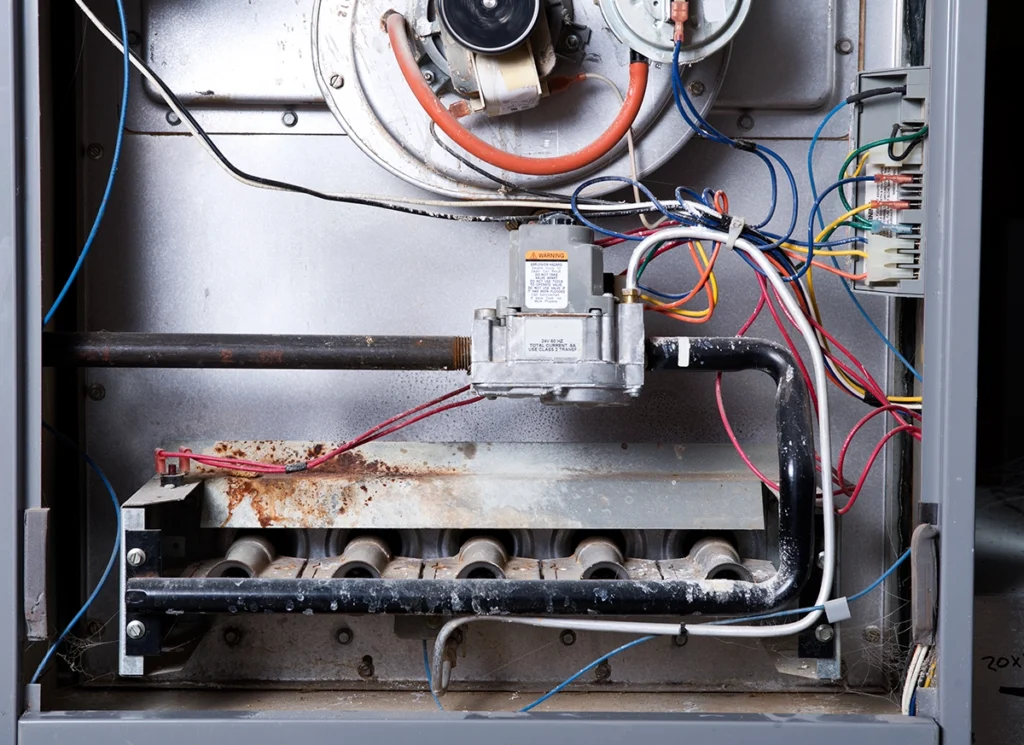
Furnace blower motor capacitor failing in Coffee City: close-up of the inside of a gas furnace showing burners, wiring
Furnaces, Maintenance, Repair

Furnace Blower Motor Capacitor Failing in Coffee City

If your furnace blower motor capacitor keeps failing in Coffee City, you’re probably trying to decide whether to replace the capacitor again or call someone to figure out what’s really going on. The truth is, a failing capacitor is almost never the root problem. It’s a symptom of something upstream that’s overworking or damaging the part. Voltage fluctuations, airflow restrictions, a struggling blower motor, or even incorrect sizing can all burn out capacitors repeatedly. Simply swapping the part without addressing the cause means you’ll be back in the same spot within months. We’re going to walk through what actually kills capacitors. You’ll learn what a proper diagnosis involves and how to stop the cycle for good. Why Your Furnace Blower Motor Capacitor Keeps Failing When your furnace blower motor capacitor keeps failing, it’s rarely the capacitor’s fault. An underlying electrical or mechanical problem is stressing the component beyond its design limits. The capacitor stores and releases electrical energy to start and run the blower motor. Repeated exposure to voltage spikes, overheating, or excessive motor strain will burn it out prematurely. This happens even if you keep replacing it. Understanding what’s actually killing your capacitors helps you avoid chasing the same repair every few months. What Causes Repeated Capacitor Failure The most common upstream causes include voltage fluctuations from an unstable electrical supply. An aging or defective blower motor drawing excessive current is another common cause. Restricted airflow forces the motor to work harder. Poor electrical connections create resistance and heat. Extreme heat buildup in the furnace cabinet also plays a role. Capacitors typically last ten to twenty years under normal conditions. These stressors collapse that lifespan to months or even weeks. A dirty air filter, blocked return vents, or a failing motor bearing can each create enough demand to fry a brand-new capacitor in short order. When we diagnose repeated capacitor failure, we test voltage at the unit. We measure the motor’s amp draw against its rated capacity. We also inspect airflow throughout the system and check electrical connections for corrosion or looseness. Replacing the capacitor without addressing contributing problems can lead to additional breakdowns. Professional furnace inspections also help identify broader safety concerns. The Consumer Product Safety Commission warns that malfunctioning fuel-burning furnaces can produce dangerous carbon monoxide. If you’re dealing with a furnace blower motor capacitor failing in Coffee City, schedule a visit so we can identify the problem and recommend appropriate repairs. What Does a Blower Motor Capacitor Actually Do? The blower motor capacitor acts like a battery for your furnace blower motor. It stores and releases electrical energy to start the motor and keep it running smoothly. When your thermostat signals the furnace to turn on, the capacitor delivers a surge of power. This surge overcomes the motor’s resting inertia and spins it up to operating speed. Once running, the capacitor continues to stabilize the voltage and keep the motor torque steady as air moves through your ductwork. Because the capacitor cycles on and off every time your furnace runs, often dozens of times per day during Coffee City winters, it wears down over time. Heat is its biggest enemy. When your system struggles with airflow restrictions like a clogged filter, refrigerant pressure imbalances, or failing bearings inside the motor itself, the blower works harder and generates more heat. That excess heat degrades the capacitor’s dielectric material (the insulating layer inside the component). As a result, it causes the part to bulge, leak, or lose its ability to hold a charge. Many homeowners assume a failed capacitor is the problem. Even so, we’ve found it’s almost always a symptom pointing to something upstream. When we diagnose a furnace blower motor capacitor failing, we check the entire airflow path and inspect the motor windings for resistance issues. We also measure amp draw to see if the blower has been overworking. Replacing only the capacitor without addressing the underlying cause means your new part will likely fail again within months. Common Causes Behind a Failing Capacitor in Coffee City When we diagnose a furnace blower motor capacitor failing in Coffee City, we rarely find that the capacitor wore out on its own. Instead, something upstream put excessive stress on it until it couldn’t hold a charge. Electrical issues are often at the top of the list. Voltage spikes during power surges, low voltage from overloaded circuits, and loose or corroded connections all force the capacitor to work harder than it was designed to. This slowly degrades its internal components until it fails. If your home experiences frequent power fluctuations or shares a circuit with high-draw appliances, your capacitor cycles under strain every time the blower starts. Airflow restrictions create another common path to failure. When the blower motor struggles against a clogged filter, blocked vents, or collapsed ductwork, it draws more current to move the same volume of air, and that extra current heats the capacitor. Heat is one of the fastest killers of capacitor dielectric film. We also see mechanical wear in the blower motor itself. Dry or misaligned bearings, a bent fan wheel rubbing against the housing, or an imbalanced assembly all increase the electrical load and push the capacitor beyond its rated tolerance. Refrigerant imbalances and dirty coils can compound the problem by forcing longer run times and more start cycles. Because several problems can contribute to premature capacitor failure, we perform a thorough diagnostic before recommending replacement. We measure incoming voltage and inspect the blower assembly for wear. We also check for airflow restrictions and test the motor’s amp draw under load. This helps us identify conditions that may have contributed to the failure. When to Call C&R HVAC About Your Furnace If your furnace is cycling on and off every few minutes, struggling to push air through the vents, or making a clicking sound without the blower starting, the capacitor may be failing again. You should also call if you notice a burning smell near the furnace. Other warning signs include the

Scroll to Top