
HVAC Ductwork Guide: Types, Problems & Solutions
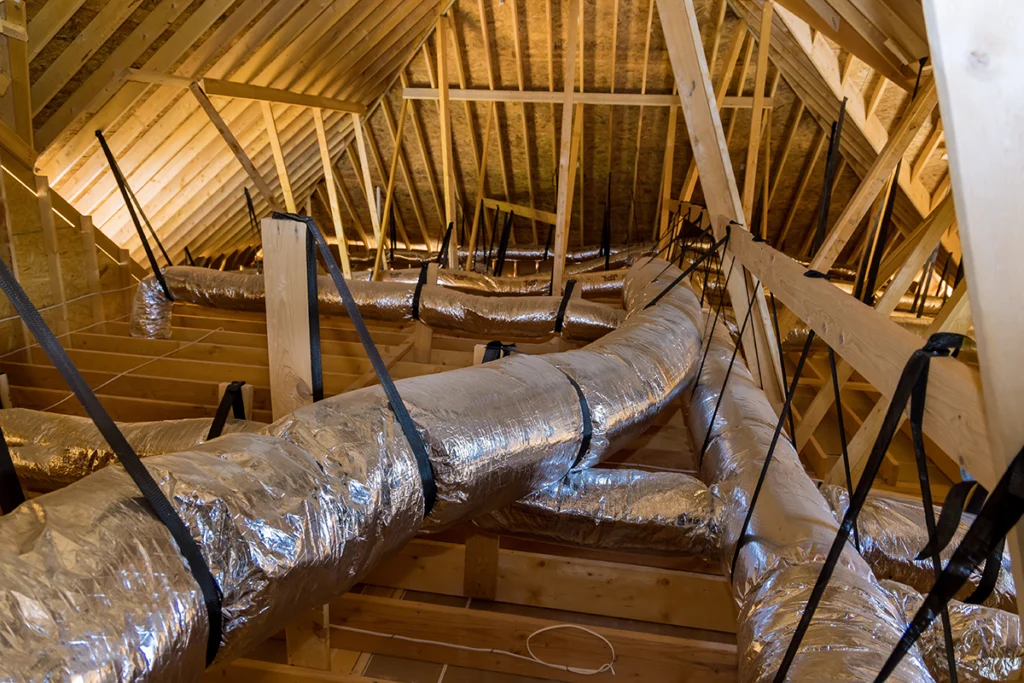
Your HVAC ductwork is the hidden highway that distributes conditioned air throughout your home. Most homeowners focus on their furnace or air conditioner. However, the duct system plays an equally important role in keeping you comfortable year-round. At C&R Services, we’ve seen how poorly designed or damaged ductwork can waste energy. In fact, it can spike utility bills and leave certain rooms uncomfortably hot or cold. Understanding how your ducts work helps you make informed decisions. Also, recognizing when they need professional attention is equally important for your home’s comfort system. What Is HVAC Ductwork and How Does It Function? Ductwork consists of a network of metal, fiberglass, or flexible tubes. These tubes carry heated or cooled air from your HVAC equipment to every room in your home. Think of it as your home’s respiratory system. The supply ducts deliver conditioned air to living spaces. Meanwhile, return ducts pull air back to your furnace or air handler to be reconditioned and recirculated. This continuous cycle keeps your indoor environment comfortable. Most duct systems include several key components that help your HVAC system run properly. The main supply trunk connects directly to your furnace or air handler. Then it branches out into smaller ducts. These branches split further into individual runs that terminate at supply vents in each room. Return air vents pull air back through return ducts to complete the cycle. Properly balanced airflow between supply and return is essential for system efficiency. Common Types of HVAC Ductwork Not all duct systems are created equal. The type installed in your home affects everything from energy efficiency to noise levels. We work with several common types, each with distinct characteristics. Sheet Metal Ductwork Galvanized steel or aluminum ducts are the most durable option. They’re also the industry standard for residential installations. These rigid ducts resist mold growth and handle high air pressure efficiently. Plus, they last for decades when properly installed. They’re also the easiest to clean and maintain. Because metal conducts temperature readily, insulation is critical to prevent energy loss in unconditioned spaces like attics. Flexible Ductwork Flex duct consists of a wire coil covered with flexible plastic. It’s surrounded by insulation. This type is lightweight, inexpensive, and easy to install in tight spaces. Rigid ducts won’t fit in these areas. However, flex duct can sag, kink, or tear if not supported properly. This restricts airflow and reduces efficiency. We often use flex duct for short runs connecting rigid trunks to individual vents. Even so, it’s not ideal for long spans or main trunk lines. Fiberboard and Fiberglass Ductwork These ducts are made from compressed fiberglass strands and resin. They provide built-in insulation and help dampen sound. This makes them quieter than metal alternatives. The downside is that the porous surface can harbor moisture, mold, and dust. This happens if they’re not properly sealed and maintained. They’re also harder to clean than smooth metal surfaces. Although less common today, we still encounter them in older homes. Signs Your HVAC Ductwork Needs Professional Attention Most of your ductwork hides behind walls, in crawlspaces, or above ceilings. Because of this, problems often go unnoticed until they become serious. Watch for these warning signs that indicate your ducts need professional inspection. Uneven Heating or Cooling Some rooms may stay stubbornly hot in summer or cold in winter. Meanwhile, others feel comfortable. If this happens, your ductwork likely has airflow problems. Leaks, disconnected sections, or poorly designed layouts prevent conditioned air from reaching certain areas. A professional assessment can identify where the system is losing efficiency. Then we can recommend solutions. Unusual Noises During Operation Rattling, whistling, or banging sounds coming from your vents often indicate problems. These may be loose connections, gaps in ductwork, or undersized ducts. Undersized ducts can’t handle the airflow your system produces. These noises signal that something needs adjustment or repair. Address them before the problem worsens. Higher Than Normal Energy Bills Leaky or poorly insulated ducts force your HVAC system to work harder. They also make it run longer to maintain your desired temperature. Research from ENERGY STAR shows that, in a typical house, about 20 to 30 percent of the air moving through the duct system is lost due to leaks, holes, and poorly connected ducts. This happens before it ever reaches your living spaces. That’s like leaving money in your attic or crawlspace every month. Your bills may climb without a corresponding rate increase or usage change. If so, duct issues might be the problem. Excessive Dust Throughout Your Home Leaky return ducts can pull dusty, unconditioned air from various spaces. These include attics, crawlspaces, or wall cavities into your living areas. You might notice dust building up faster than usual despite regular cleaning. Certain vents may seem to blow dusty air. If this happens, your return ductwork may have gaps that need sealing. In some cases, heavy dust buildup inside the system can also raise questions about whether duct cleaning is worthwhile. The Environmental Protection Agency explains that air duct cleaning may be appropriate in certain situations, such as visible mold growth, vermin infestation, or excessive dust and debris inside the ductwork. If you’re noticing those warning signs, it’s a good idea to have your system professionally inspected first. Why Professional HVAC Ductwork Design and Installation Matters Proper duct design isn’t guesswork—it’s a science. Our technicians calculate the precise size, layout, and configuration needed for optimal airflow. This calculation is based on your home’s square footage, layout, insulation levels, and HVAC equipment capacity. Undersized ducts restrict airflow and strain your system. On the other hand, oversized ducts can cause poor air velocity. This leads to poor distribution and temperature control issues. Installation quality matters just as much as design. Every joint, seam, and connection must be properly sealed to prevent air leakage. Ducts in unconditioned spaces require proper insulation to maintain air temperature. Support straps must be spaced correctly to prevent sagging. Also, flex duct should be stretched fully to avoid airflow restrictions. These