
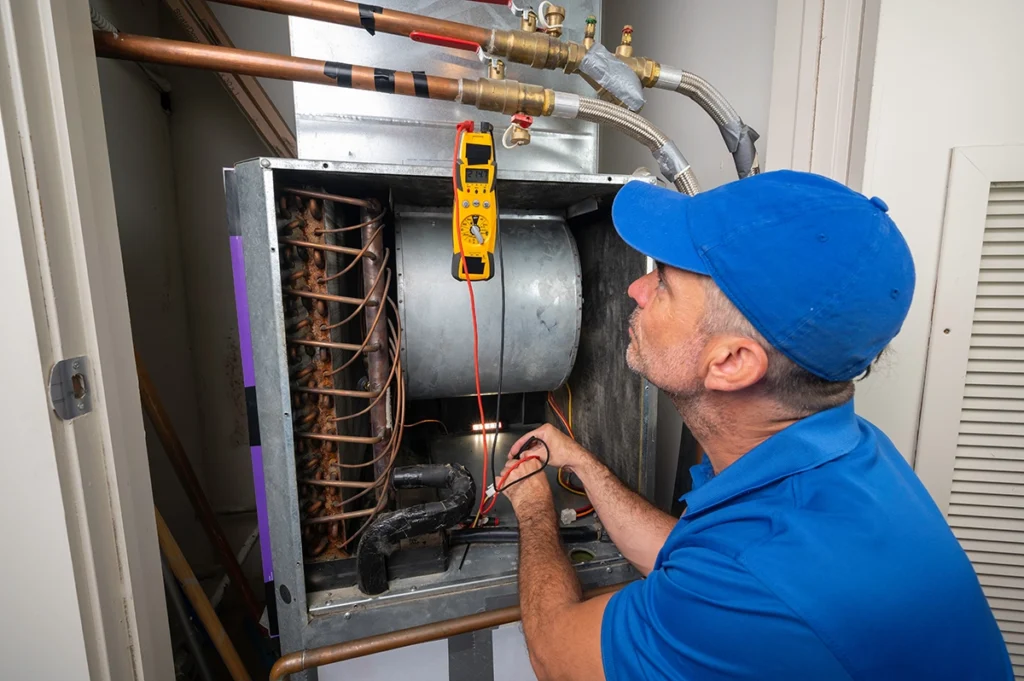
Air Conditioner Evaporator Coil: Problems & Solutions
When your air conditioner isn’t cooling like it should, the problem often lies with your air conditioner evaporator coil. We see this component fail more than most homeowners realize. Understanding how it works can help you catch problems early. Your evaporator coil is essential to the entire cooling process. It quietly does its job inside your indoor air handler while absorbing heat from your home. At C&R Services, we want you to recognize when something’s wrong. Then you’ll know when to call us for help. What Is an Air Conditioner Evaporator Coil? Your air conditioner evaporator coil sits inside the indoor unit of your air conditioning system. It’s typically housed within the air handler or furnace cabinet. This A-shaped or N-shaped component consists of copper or aluminum tubing bent into multiple rows. Thin metal fins are attached to these tubes. Refrigerant flows through these coils, and that’s where the magic happens. The refrigerant absorbs heat from the air passing over the coil. Think of it this way: your outdoor condenser unit releases heat to the outside air. Meanwhile, the evaporator coil inside does the opposite. It pulls warmth out of your indoor air and transfers it to the refrigerant. As warm air from your home blows across the cold evaporator coil, the refrigerant inside absorbs that heat. The now-cooled air then circulates back through your ductwork. This process lowers your home’s temperature. The process also removes humidity from your air. Because the coil surface is cold, moisture in the air condenses on it. This works much like water droplets form on a cold glass of tea on a humid day. That condensation drips into a drain pan and flows away through a condensate line. This is why proper drainage matters so much. How Your Air Conditioner Evaporator Coil Works in the Cooling Process Understanding the refrigeration cycle helps you appreciate why the air conditioner evaporator coil is so critical. The cycle starts when liquid refrigerant enters the evaporator coil through an expansion valve. As it enters, the refrigerant expands and its pressure drops dramatically. This causes its temperature to drop significantly. This super-cold refrigerant then flows through the tubing. Meanwhile, your blower motor pushes warm air from your home across the coil’s surface. The refrigerant eagerly absorbs heat from that air. It changes from a cold liquid into a cool gas. Once the refrigerant has absorbed all the heat it can hold, it travels through refrigerant lines to your outdoor condenser unit. Outside, the compressor pressurizes the refrigerant gas and heats it even more. The hot, pressurized gas then flows through the condenser coil. Here, outdoor air absorbs the heat. As the refrigerant cools, it condenses back into a liquid and the cycle repeats. According to the U.S. Department of Energy, air conditioners work by transferring heat from your home’s interior to the outside environment. Without a properly functioning air conditioner evaporator coil, this cooling process breaks down. Common Air Conditioner Evaporator Coil Problems We See After years of servicing air conditioning systems across Tyler, we’ve diagnosed countless evaporator coil issues. Knowing the warning signs helps you catch problems before they cause complete system failure. Early detection also prevents expensive secondary damage. Frozen Evaporator Coil One of the most common issues we encounter is a frozen coil. You might see ice forming on the refrigerant lines. You could also notice your system running constantly without cooling. In these cases, you’re likely dealing with this problem. Several things cause coils to freeze. These include restricted airflow from a dirty air filter, low refrigerant levels, or a broken blower motor. When airflow across the coil decreases, the refrigerant gets too cold. Moisture freezes on the coil surface. That ice layer then blocks even more airflow, making the problem worse. Eventually, you’ll have a solid block of ice that completely prevents cooling. If you notice ice formation, turn off your system immediately and call us. We’ll safely thaw the coil and diagnose the underlying cause. This could be airflow restriction, refrigerant levels, or mechanical failure. Dirty or Clogged Coils Dust, pet hair, and other airborne particles gradually build up on evaporator coils. This happens despite your air filter’s best efforts. Over time, this buildup acts like a blanket. It insulates the coil and prevents efficient heat transfer. Your system has to run longer to cool your home. As a result, energy bills climb and cooling performance drops noticeably. We also see biological growth on coils, especially in our humid climate. Mold and mildew thrive in the dark, damp environment around the coil. Beyond reducing efficiency, this growth can spread musty odors through your home. According to the EPA, heating and cooling systems can contribute to indoor air quality concerns, especially when moisture and pollutants are involved. In severe cases, this can lead to dirty sock syndrome. Refrigerant Leaks The air conditioner evaporator coil develops leaks more often than most people expect. Corrosion from condensation can create tiny holes in the coil tubing. Formaldehyde off-gassing from building materials also causes damage. Simple age can lead to leaks as well. Because the evaporator coil operates under negative pressure during cooling, these leaks allow refrigerant to escape. Low refrigerant levels mean less heat absorption. Your home stays warmer even though the system runs constantly. You might notice ice forming on the refrigerant lines. You could also hear a hissing sound near the indoor unit. Refrigerant leaks require professional repair. We’ll locate the leak and properly seal it using specialized equipment. Then we’ll recharge the system to manufacturer specifications. Coil Corrosion and Age Evaporator coils don’t last forever. After 10-15 years of constant exposure to condensation and temperature swings, even well-maintained coils start deteriorating. The metal fins corrode and tubing develops pinhole leaks. Efficiency drops as well. Sometimes the most cost-effective solution is replacing the coil rather than repeatedly patching leaks. We’ll always give you honest guidance about whether repair or replacement makes more sense. If your system is older and the coil is failing, it might